Standardizing Production Data: From Unstructured Notes to Informed Decisions
Manual work is documented in almost every production environment. The challenge is not whether documentation exists, but rather how it is recorded.
Depending on who is on shift, how much time is available, and which paper template or spreadsheet is at hand, the resulting records vary wildly. At first glance, everything seems covered. But when the data needs to be compared, analyzed, or used for strategic decisions, the gaps become glaringly visible.
Standardization is what closes those gaps.
Documentation Is Not the Same as Usable Data
Recording information is not the goal, enabling people to make informed decisions with that information is. Many production teams already invest time in documenting:
-
Quality deviations and scrap reasons
-
Part quantities and rework
-
Interruptions and line stoppages
Yet, without a standardized framework, these notes remain isolated. A deviation recorded by Shift A cannot easily be compared with an issue from Shift B. A recurring tooling error cannot be tracked over time. The effort is there, but the operational clarity is missing.
What Standardization Actually Means
Standardization is not about adding bureaucratic complexity or stripping operators of their flexibility. It simply means creating a shared digital language on the shopfloor.
In practice, a standardized manual data collection system relies on:
-
Predefined categories for common events and deviations
-
Consistent terminology across shifts and employees
-
Structured input instead of free-text descriptions
-
Clear triggers for when and how data is recorded entry must be made
When different people face the same shopfloor situation, the system should guide them to produce comparable, clean data.
From Individual Notes to Shared Structure
Without standardization, documentation reflects individual thinking. With standardization, documentation reflects production reality.
This shift changes completely how information behaves:

Instead of asking, "What did the operator mean by this note?", plant and quality managers can now ask: “How often does this specific defect category occur at workstation 4, and what is the root cause?”

What Should Be Standardized
To build a reliable foundation without overwhelming the shopfloor, focus on standardizing the parameters that drive productivity and quality:
-
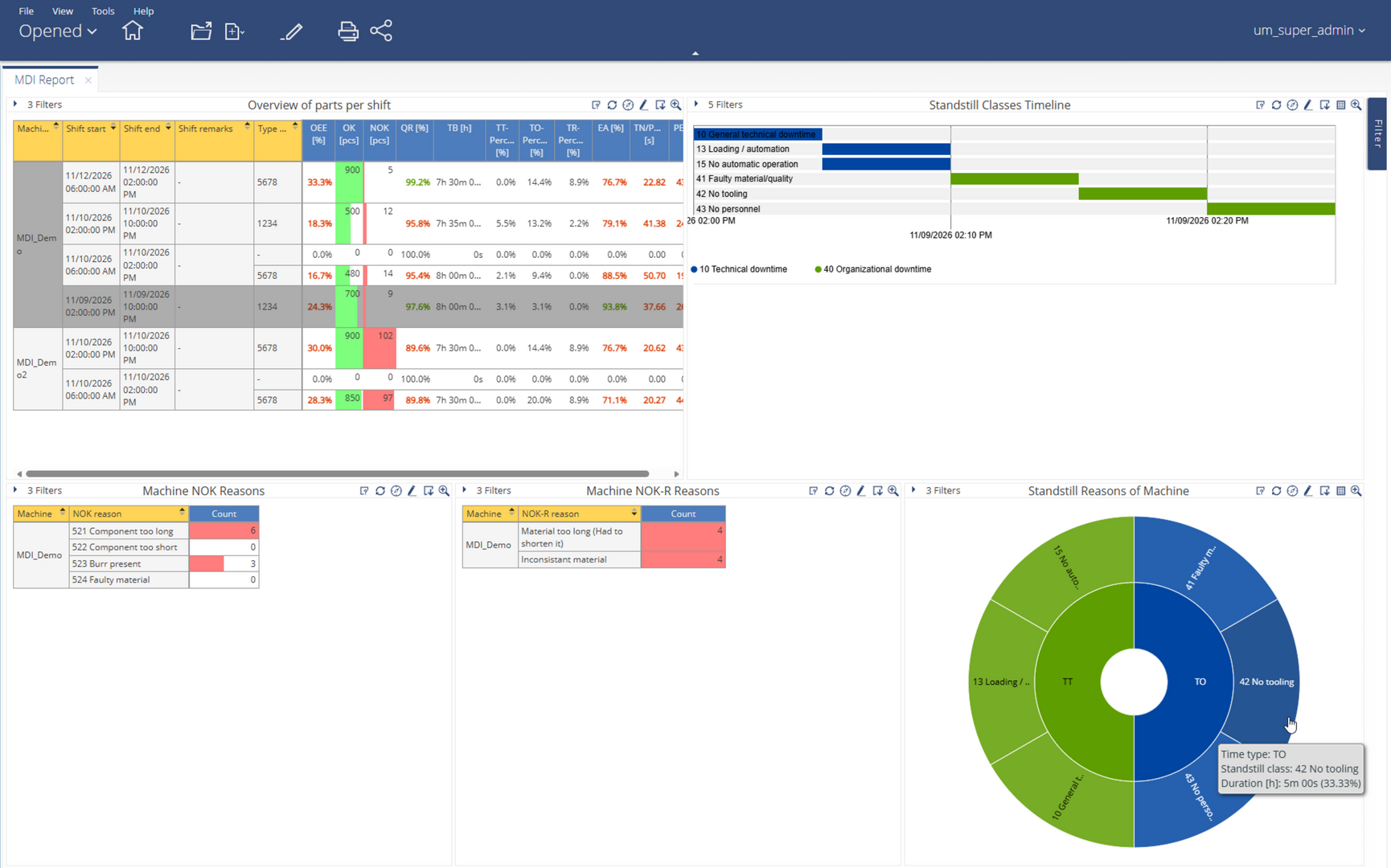
Production Progress: Actual vs. target quantities in real-time.
-
Downtime & Interruptions: Clear, predefined reasons (e.g., waiting for material, tool change, minor stoppage).
-
Quality & Scrap: Specific defect categories (e.g., part too long, scratch, material defect) and rework reasons.
-
Contextual Metadata: Automatic pairing of manual inputs with timestamps, shift info, and order numbers.
This does not require extensive input. It requires the right structure.
Why Ease of Use Decides Everything
The most sophisticated data structure will fail if it is impractical for the operator. Manual assembly and manufacturing happen under immense time pressure. Documentation is always a secondary task.
If capturing data is complicated, slow, or unclear, it will either not happen at all or happen inconsistently. That is why successful standardization always depends on:
-
Intuitive, touch-friendly UIs designed directly for frontworkers.
-
Minimal effort (one-click inputs, quick counters).
-
Fast interaction right at the workstation without leaving the process flow.
When documentation becomes easy, consistency and high data quiality follows naturally.
The Turning Point for Shopfloor Decisions
When manual data is standardized, the impact becomes visible quickly. Not because more data is collected, but because the data becomes usable.
With a structured approach, production teams can:
-
Compare shifts and stations based on consistent, objective criteria.
-
Identify recurring quality issues before they escalate.
-
Measure the direct impact of process improvements and corrective actions.
-
Uncover root causes of downtime at previously "invisible" manual stations.
What previously required interpretation becomes measurable and a competitive advantage.

What Comes Next
Standardizing manual data is the essential first step. The next is making this process seamless and digital directly on your shopfloor.
Modern manufacturing execution environments require specialized frontend applications that bridge the gap between human operators and IT systems without adding bureaucratic friction.
See Standarized Data Collection in Action
To understand how this looks on a live production line, view the product showcase video below:
Would you like to learn more? We are here for you!