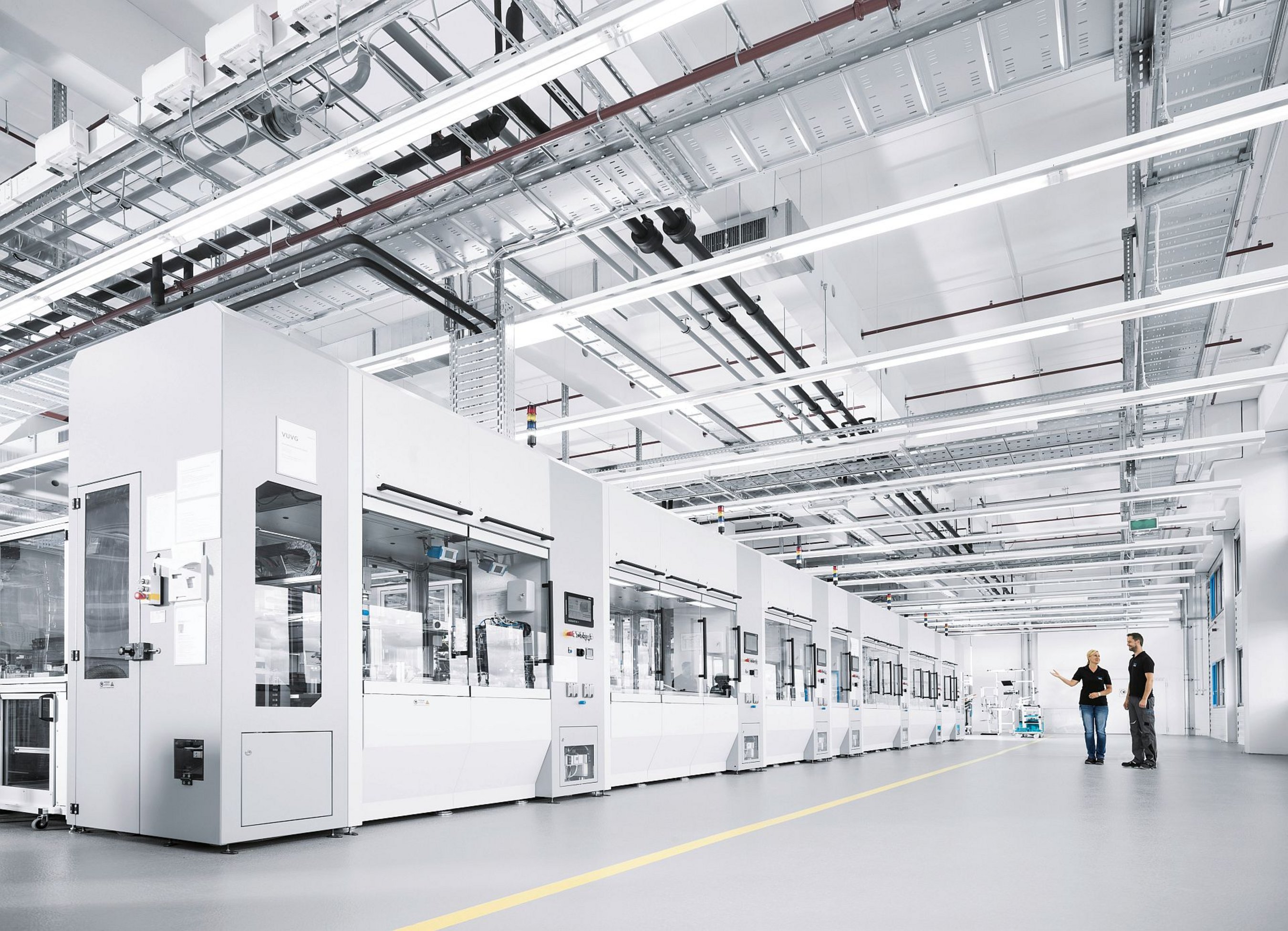

For Festo AG, a leader in valve and electronic component production, optimizing manufacturing processes and elevating machine efficiency were key objectives. By integrating STIWA's Shopfloor Software, including the AMS ZPoint-CI Shopfloor Monitor and ZPoint-CI Andon Board, Festo successfully advanced its production capabilities.
Festo AG's technology factory in Scharnhausen, a leading plant for valves and electronic components and a pioneer in digital production, is characterized by its efficient processes. To further enhance machine efficiency, Festo has long trusted STIWA software. This collaboration enables seamless data recording and analysis of production machines, revealing complex operational insights, pinpointing weak spots, and ultimately leading to a substantial increase in performance.
Tailored Software for Specific Needs
Festo values a partner that understands the evolving demands of advanced manufacturing. The development process for STIWA's software is deeply collaborative, ensuring tools are precisely tailored to real-world production environments. As David Hinterreither-Kern, Product Owner of STIWA Shopfloor Software, explains, this approach means customers, including Festo, actively influence the development of new features from the outset, ensuring the creation of tools that perfectly match their production requirements.
A Clearer Path to Higher Machine Efficiency
The need to further enhance machine efficiency at Festo led directly to collaborating on new visualizing systems like the STIWA "Andon Board" and "Shopfloor Monitor." Benjamin Heim, Management Assembly for VUVG valves at Festo, details the challenges: "We were already utilizing Andon Boards at some production lines. But the visualization of key figures was unclear, and relevant key figures were hard to read. To immediately recognize malfunctions, spot-on and clear information is necessary." Heim further explained the lack of a clear, comprehensive overview of machines and key figures, alongside the "cumbersome" process of programming existing Andon Boards via the machine control units. He emphasized, “A simple, flexible and individually changeable configuration of displayed values and key figures was urgently necessary.”
Optimized Andon Boards for Rapid Response
Through a focused, two-day analysis of production processes with Festo's production managers, it became evident that the existing Andon Boards required enhanced clarity and more informative error messages. The solution involved upgrading displays with intuitive icons, colors, and symbolic markings, moving away from text-heavy messages. Now, all relevant key figures are presented in a self-explanatory, customizable, and flexible manner, easily adaptable to evolving requirements. The multi-layered recording and display system also enables the distinction of significantly more malfunction types. "Therefore, the machine operator is led to the problem much more accurately. This ensures significantly shorter distances and a more rapid identification as well as troubleshooting," explains STIWA Software Developer Mario Mader, highlighting the direct impact on Festo's operational efficiency.
Escalation Levels for Enhanced Clarity
A further optimization involved the machine's escalation management. The Andon Board now dynamically prioritizes and highlights malfunctions and machine losses, bringing critical issues into immediate focus for the machine operator. Depending on the problem's severity, the system automatically informs the next relevant authority, such as the shift manager, following a precisely defined chronological escalation path.
Improved Overview and Communication with the Shopfloor Monitor
A significant goal for Festo was to improve the integration of shift managers and enhance inter-team communication. As Benjamin Heim notes, "The assembly shift manager did not have a direct overview of the various machine states at their workstation. This is why they also did not immediately notice when a machine operator required support." The introduction of the "AMS ZPoint-CI Shopfloor Monitor" directly addressed this. This cross-plant visualization provides real-time key figures and performance information for all machines via prefabricated dashboards accessible at each workstation. Heim confirms the immediate benefits: “Of course, this makes it much easier to control day-to-day business... We constantly keep the Shopfloor Monitor activated these days; with the optimized escalation management, it also immediately becomes clear where and when rapid intervention of other persons or divisions is necessary.”
Streamlined Configuration and Enhanced Engagement
Another major advantage for Festo is the system's straightforward configuration. Operators can now easily access or modify standardized features and key figures with minimal effort, eliminating the need for complex interventions in system control. Benjamin Heim underscores the impact: "Of course, this facilitates work incredibly, guarantees rapid opportunities for response, and raises the OEE." Beyond operational benefits, Festo also observes a positive social dynamic. Heim elaborates, “The dashboards are very motivating; the employees measure themselves via the transparent displays. This improves communications among each other and leads to 'challenges' about who gets better values.”
A Collaboration for Continuous Improvement
The new Andon Boards and Shopfloor Monitors are now fully implemented across all automation machines at Festo in Scharnhausen. Florian Sieber, Manager of Construction Control Engineering at Festo, commends the collaboration: "The collaboration between STIWA and Festo was very pleasant. Nearly all ideas and wishes were implemented quickly; the regular agile voting sessions have led to success rapidly. The features help us now to continuously improve production."