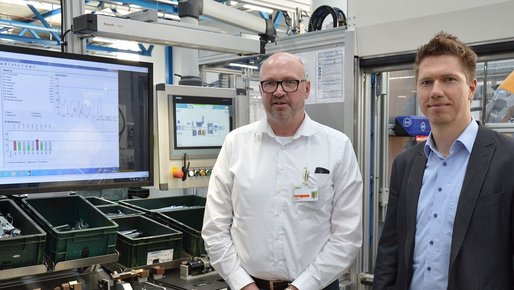
SuccessStory
Valeo: Optimizing New Product Launches with Advanced Analytics
Discover how Valeo achieved an efficient production start-up with STIWA's analysis software, gaining higher quality, shorter cycle times, and a…
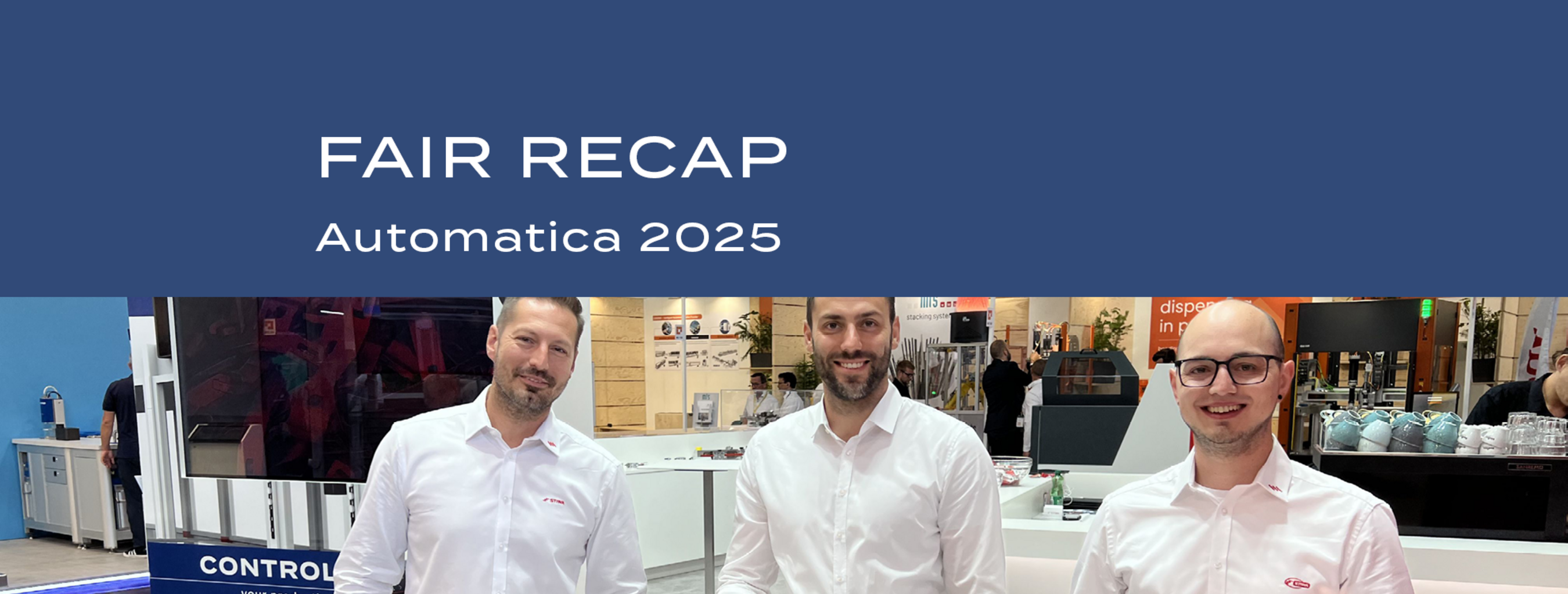
Automatica June 24th-27th, 2025.
Automatica 2025 broke all records with over 800 exhibitors and 45,000 visitors. The halls were packed, the atmosphere exhilarating. But what truly stayed with us was not the numbers, but the honest conversations and stories we had at our booth.
Here are three that made the biggest impression on our teams.
When a mid-sized German manufacturer sought consultation, a deep-seated industry vulnerability became clear. After shifting production to Asia over the years, the company faced a critical strategic crossroads: how to prevent competitors from overtaking it without losing control of its manufacturing and integration processes.
During these collaborative sessions, Philip Privalov identified a fundamental challenge that many modern manufacturers face. True protection of intellectual property and process efficiency does not come from software alone; it requires deep-rooted industrial DNA. This insight highlights why the STIWA model is structured to act not merely as a software provider, but as a comprehensive partner. The team delivers end-to-end support—spanning from automation-friendly product development and custom machine construction to contract manufacturing on proprietary STIWA machinery. This complete vertical integration keeps the entire production lifecycle in one place.
An established international automotive tier-one supplier recently faced immense pressure. While dominant in traditional combustion engine technologies, staying competitive in the rapidly evolving electric vehicle (EV) market demanded a swift transition. New product lines had to launch without delay, requiring a production ramp-up that was both incredibly fast and highly stable. In today's automotive climate, minimizing time-to-market is no longer a strategic advantage—it is a necessity for market survival.
This critical phase is precisely where specialized automation and manufacturing expertise becomes invaluable. Utilizing STIWA's decades of high-performance automation experience, the engineering team helps manufacturers navigate these high-stakes ramp-ups. The result is a seamless transition that secures stable cycle times and minimizes scrap from day one.
Discover how Valeo achieved an efficient production start-up with STIWA's analysis software, gaining higher quality, shorter cycle times, and a…
A Swiss engineer approached the STIWA exhibition space, seeking a way to bridge the gap between hardware automation and software intelligence. A focused technical discussion over coffee revealed a shared vision: the critical need for truly Adaptive Processes in modern manufacturing. The engineer's search ended when they discovered that the STIWA engineering team had the exact technical framework needed to turn this vision into reality. They arranged a rapid follow-up to begin implementation immediately, focusing on high-speed execution and close collaboration.
These three distinct scenarios show that beneath the surface of polished trade show demonstrations, modern industrial enterprises still wrestle with fundamental manufacturing challenges. It remains striking that even in highly advanced industries, critical production optimization efforts often rely on manual methods, such as physical stopwatches, rather than real-time, data-driven insights.
At the same time, a powerful pioneering spirit remains highly visible across the industrial sector, exemplified by forward-thinking companies like NEURA Robotics. Their cutting-edge approach delivers a clear, motivating message: domestic manufacturing possesses the capability and technological depth to lead on the global stage. Amid widespread industry concerns about international competitiveness, this collaborative drive reminds us that the path forward lies in technological leadership, automation-first product design, and swift, decisive execution.