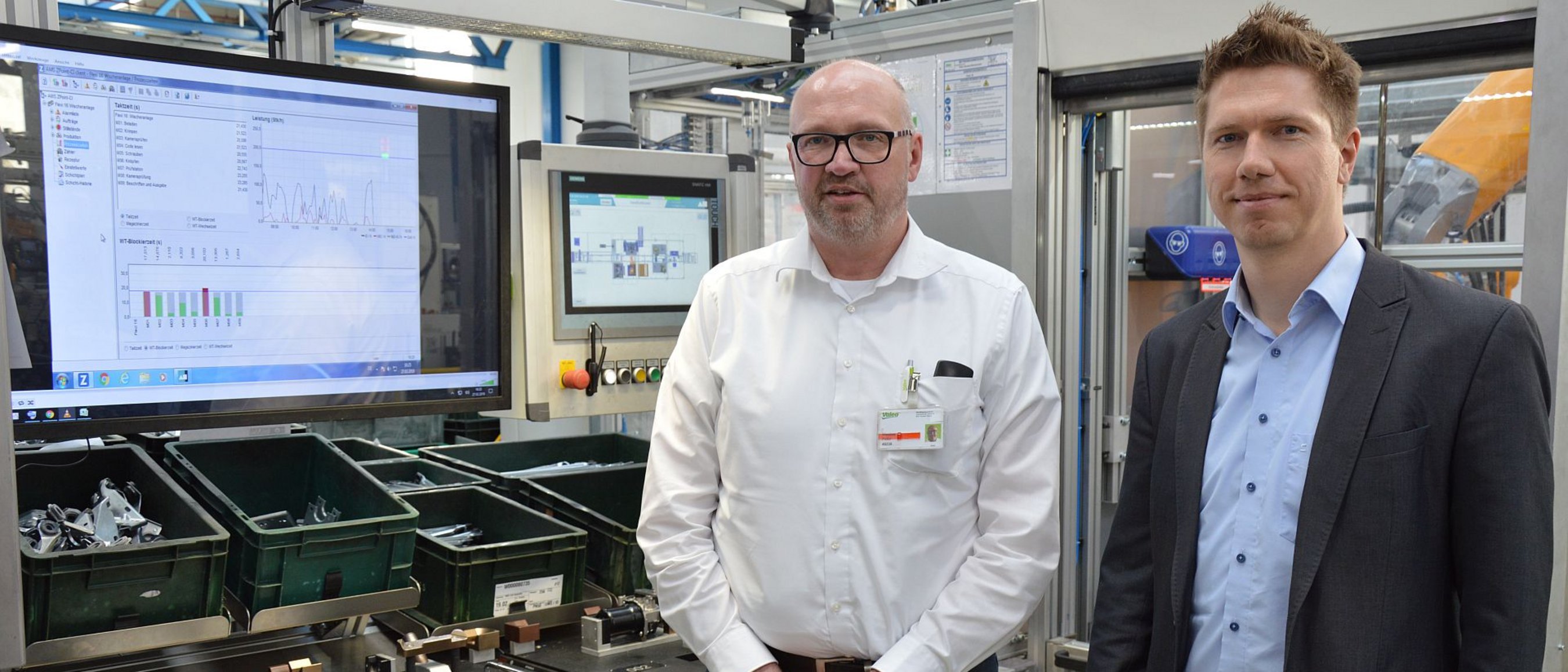

Ensuring an efficient, high-quality launch of their innovative Flexi 16 wiper system was a key objective for Valeo Wischersysteme GmbH. To streamline this critical ramp-up phase, Valeo leveraged the comprehensive capabilities of STIWA’s AMS Analysis-CI software. This strategic move resulted in superior quality, shorter cycle times, and significantly reduced lead time. Valeo Wischersysteme GmbH, a global leader in windscreen and rear window wiper and washer systems, produces over three million wiper systems at its Neuses location, ensuring optimum visibility and driving safety for drivers worldwide.
Large Quantities Demand Stable Processes
In serial production of this scale, high quality and short cycle times are crucial for efficient, cost-effective manufacturing. “The time factor often determines success or failure,” summarizes Alexander Meisinger from STIWA Shopfloor Software. “The better and more effective the plant ramp-up, the shorter the time-to-market.”
Choosing the Right Partner for Data-Driven Success
To ensure an efficient and transparent start to production of its new Flexi 16 wiper system at the Neuses site, Valeo made a strategic decision to opt for an IT-supported machine ramp-up. They turned to the Austrian automation specialist STIWA, whose extensive experience they highly value. Peter Nieslon, Head of Industrial Engineering at Valeo, explains: “As an experienced manufacturing company that has been building its own systems for years and optimizing them using in-house software products, STIWA Software was our supplier of choice. This expertise, spanning everything from development to manufacturing, sets STIWA apart from other mechanical engineering company or system providers.”
Early Insights for Uncompromised Quality
By using AMS Analysis-CI, the team gained immediate, real-time insights into the production processes during the ramp-up phase. As STIWA application engineer Thomas Langthaler explained, this enabled Valeo to identify and resolve complex interdependencies and issues in real time, thereby ensuring quality right from the start.
Cross-Functional Team Drives Rapid Production Readiness
A smooth and efficient ramp-up of the machine was a direct result of this joint collaboration. An interdisciplinary team, consisting of Valeo’s machine operators, the machine manufacturer and STIWA’s software specialists, worked hand in hand. Peter Nieslon reiterates Valeo’s objective: “Our aim was to increase machine transparency and stabilize all processes as quickly as possible in order to move smoothly into series production.” Direct PLC integration and the commissioning of the software at the machine manufacturer’s premises ensured that a solid data foundation was established at an early stage. “This is a major advantage that helps to optimize machine utilization within a shorter timeframe,” notes Langthaler.
Precision Diagnostics Lead to Optimized Performance
Over several weeks, extensive machine, operating, and quality data were recorded and analyzed, enabling Valeo to significantly optimize performance, availability, and quality. Key findings and actions included:
- Quality Data Analysis: Promptly identified and replaced a specific workpiece carrier consistently producing defective parts.
- Cycle time optimization: The slowest production module was quickly identified. Joint adjustments made with the machine manufacturer subsequently led to an increase in overall machine output.
- Process Deterioration Detection: Time-process analysis revealed frequent deviations in measured values, indicating that certain manufacturing processes were degrading over time, often due to wear.
- Proactive Maintenance: As a direct result, STIWA introduced process monitoring, implementing a warning system to alert operators to required maintenance or corrections before losses occur.
Sustained Efficiency and Future Readiness
In daily operation, the STIWA software continues to enhance Valeo's production efficiency, both technically and economically. Peter Nieslon summarizes the impact: “The transparent provision of all required data and the rapid failure analyses have helped us to achieve a consistent OEE increase already in the ramp-up phase. Moreover, the continuous documentation of serial numbers provides access to all process parameters, traceable to each individual part produced in serial production. This easy handling in process optimization and the automated reporting makes the work of our employees in production, maintenance, or production planning a good deal easier every day.” Valeo is keen to continue this successful collaboration, with Nieslon stating: “Nobody else but STIWA provides practical software solutions offering such ease of use. Therefore, I am looking forward to the next projects.”