
The Bermuda Triangle of Manufacturing: Why 79% of AI Projects Fail

79% of manufacturing AI projects sink in the "Bermuda Triangle" of endless, costly PoCs. Discover how the STIWA Success Triangle aligns data and domain expertise to secure your ROI.

A staggering 79% of digitalization projects in manufacturing miss their targets. This number is not an anomaly; it is a system failure. When AI initiatives on the shop floor fail, it is rarely due to poor algorithms or slow processors. It is because they lack a solid foundation.

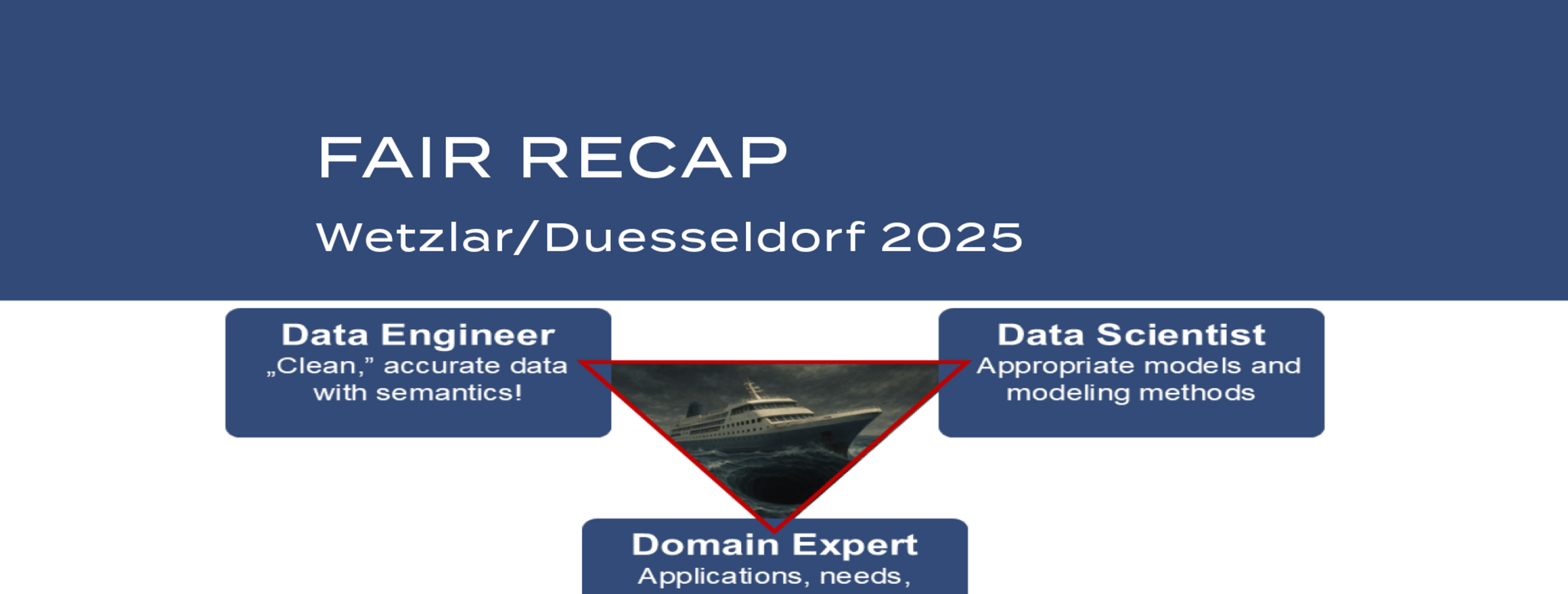
To deploy AI successfully in production, you must balance three competing forces. The moment one side weakens, your ROI evaporates, and your project sinks into the "Bermuda Triangle" of endless, costly Proof of Concepts (PoCs).

The STIWA Success Triangle: Three Roles, One Goal

Truly successful industrial AI applications do not rely on solo data scientists. They stand on three indispensable pillars:

  • The Data Engineer (The Foundation): Mission: "Clean, correct data with clear semantics!" Without this role, you get "garbage in, garbage out"—except with AI, it just becomes faster, automated garbage.
  • The Data Scientist (The Brain): Responsible for choosing the right mathematical models and modeling methods to extract actionable insights from structured data streams.
  • The Domain Expert (The Steering Wheel): The person who asks the crucial shop floor questions: "What does this solve at the machine? Where is the actual bottleneck?" This is the most frequently ignored role, yet it is the only one that ensures practical relevance.

 The Danger: If these three roles are out of sync, your Success Triangle instantly warps into a Bermuda Triangle where budgets, hours, and executive patience disappear without a trace.

Shop Floor Reality: The Gap Between Hype and Practice

Observations from our teams at the AAA trade fairs in Wetzlar and Düsseldorf show where manufacturers struggle today. Three core challenges dominate the market:

  • Visualization is Not Analysis: Many companies have built dashboards and achieved basic transparency. However, they lack genuine predictive analytics to turn that transparency into financial value. Seeing the data is step one; understanding why a process drifts is the actual goal.
  • The Myth of the Paperless Factory: In an astonishing number of modern plants, critical processes still rely on paper forms and clipboards. These analog gaps remain the primary source of data friction and process errors.
  • The Brownfield Challenge: Connecting brand-new machinery is easy. The real discipline lies in brownfield connectivity—integrating legacy machines with varying protocols. Without deep middleware expertise, your AI project will starve of data before it even starts.


Survey Insights: What the Industry Actually Wants

To back these observations with data, we surveyed the industry professionals at the AAA trade fairs. The results reveal a highly pragmatic, but divided market.

Current Adoption: Do You Already Have AI or ML Applications In-House?

The data shows a clear segmentation:

  1. A small group of frontrunners running successful, production-grade AI use cases.
  2. A large middle tier that is eager to start but lacks a clear roadmap and struggles to define the first step.
  3. A skeptical group that has yet to see a solid business case for their specific operations.

This is where the line is drawn: to move the middle and skeptical tiers, providers must deliver highly targeted, low-risk Minimum Viable Products (MVPs) that demonstrate rapid financial payback on the machine.

Core Priorities: Which Use Cases Do You Want to Solve with AI?

The demands of the shop floor are hyper-pragmatic. Manufacturers want immediate operational impact.

  • OEE Improvement & Defect Reduction: Maximizing Overall Equipment Effectiveness and preventing scrap remain the absolute top priorities.
  • The Rise of Predictive Maintenance: This use case saw a massive spike in demand, particularly in Düsseldorf. The market is rapidly shifting from reactive firefighting to proactive, data-driven maintenance scheduling.
  • Academic KPIs are Deprioritized: Long-term theoretical benchmarking across multiple plants sits at the bottom of the wishlist. Plant managers do not want abstract statistics; they want to fix active line stoppages.

Steering Your AI Project to Success

Navigating industrial AI is not about chasing the most complex neural network. It is about balancing your Success Triangle.

Ensure your data engineers, data scientists, and domain experts are working on the same plane, with the same semantic language, before you write a single line of code.

Blog

The Four Stages of Your Shop Floor Digitization

Many digitization projects on the shop floor fail. This blog highlights a pragmatic 4-step strategy that will lead you to measurable success, reduced…

read more

Reading time: 5 min

Best Practice
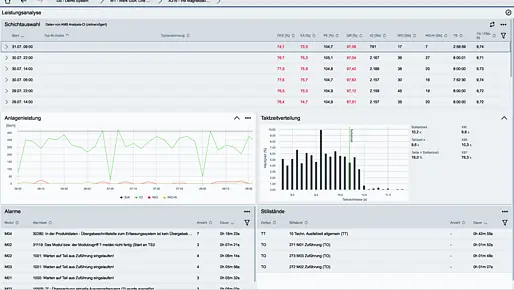
 Dashboard zeigt Maschinenstatus, KPIs, Alarme und Performance in Echtzeit an.
Blog

MES Software: Why Manufacturing Value Begins at the Machine

Traditional MES systems manage production planning, but they often lack the machine-level data depth needed to solve complex downtime issues. Learn…

read more

Reading time: 5 min

Best Practice
Blog

Problems Solved Instead of Theory Discussed

Had enough of theory? As an engineer or production manager, STIWA's digital machine model helps you avoid commissioning errors, save retrofit costs,…

read more

Reading time: 3 min

Best Practice

Your On-site Representatives

Schedule an Appointment

Daniel Stebner
Solutions Consultant
STIWA Software
Portrait Philip Privalov

Schedule an Appointment

Philip Privalov
Head of Business Development
STIWA Software

Keep up to date with our
newsletter


Subscribe Now