Problems Solved Instead of Theory Discussed

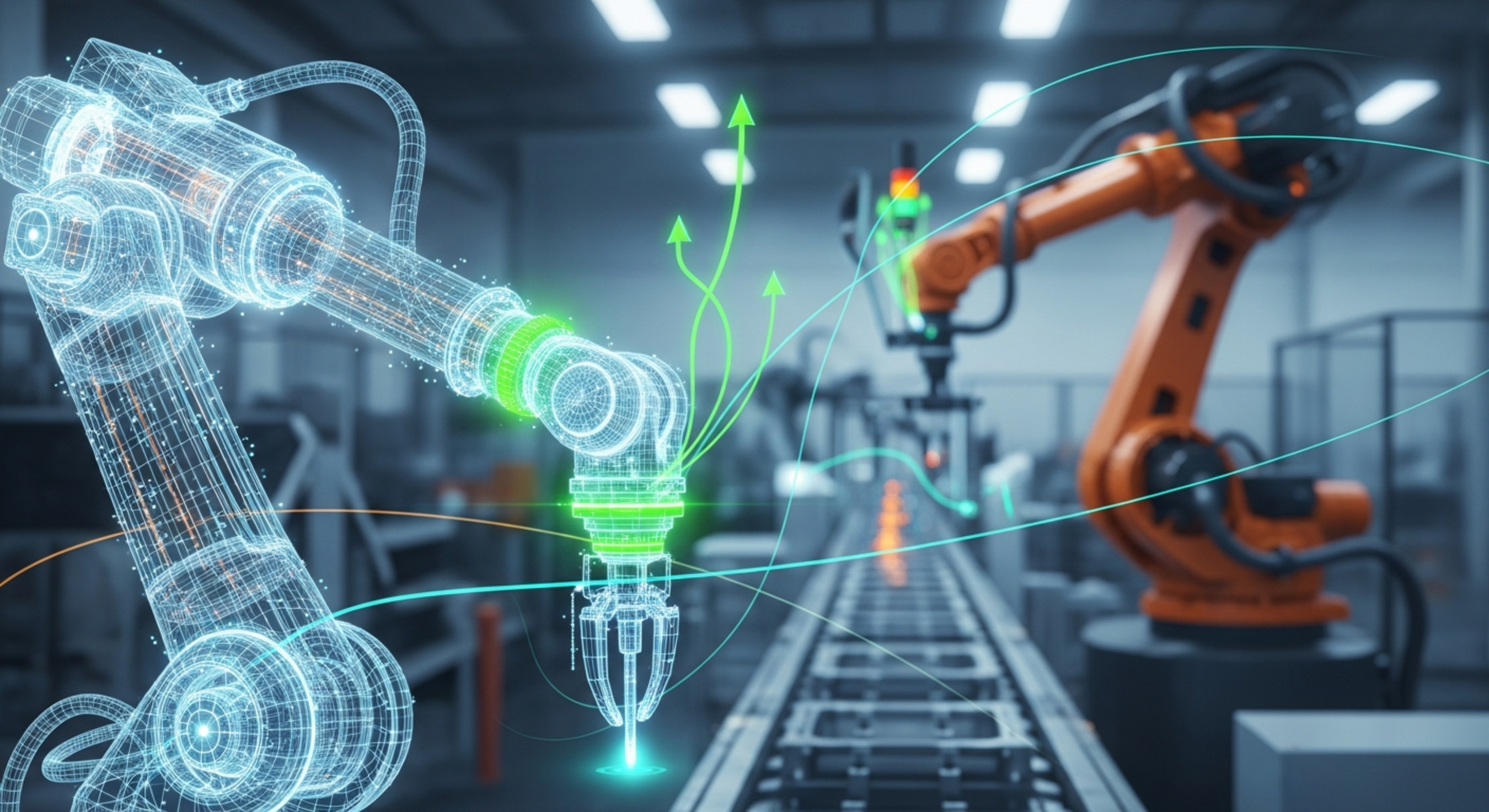
Had enough of theory? As an engineer or production manager, the STIWA digital machine model helps you avoid errors during commissioning, save retrofit costs, and get control centers that are ready for immediate use. Discover practical solutions for error-free production from planning to series production.

Martin Schwarzenberger, MSc | Herbert Kiesenhofer, MSc

Reading time: 3 min

Best Practice

What’s in it for me as a practitioner?

Imagine you could avoid errors during commissioning almost entirely, get an instantly usable control center, skip time-consuming retrofits, and reduce downtime measurably. That’s exactly what STIWA Software enables through a digital machine model. No hype, no buzzwords – just tangible relief in everyday operations.

Practice, not theory: Tackling real-world challenges

Many blog posts stay abstract, but not this one. Here, you'll see exactly what you gain as a planner, designer, or production manager. With tangible examples, real project insights, and clear benefits without theoretical fluff. So you can decide for yourself: is this worth it or not?

1. Engineering – Plan digitally instead of retrofitting

Real-world example:
During the kickoff with an automotive customer, it became clear: to ensure full traceability, four additional sensors were required. Because this was identified early, the hardware planning was adjusted and a costly retrofit (over €20,000) was avoided.

What happens:

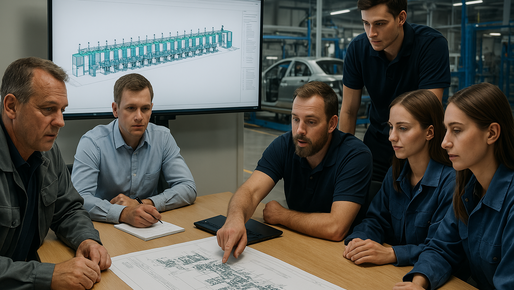
  • Joint kickoff with all stakeholders

  • Structured data concept is created

  • Traceability, interfaces (ERP/MOM), and rework concepts are defined early

Your benefit:

  • Clarity & structure from the start

  • No surprises during commissioning

  • Lower retrofit costs

“In the past, we only realized what was missing during commissioning but today, we know it before the system is built.” – Project manager at a mechanical engineering company

2. Project Planning – The digital data twin is born

Real-world example:
A system with 18 stations was digitally modeled, including all process parameters, special functions, and product variants. The result: 100% of PLC-relevant data was available before a single cable was laid.

What happens:

  • A virtual data machine model is built

  • An implementation guide for PLC integration is created

  • Recipe management & special functions are specified

Your benefit:

  • All requirements are included in the system

  • Fewer questions & feedback loops in PLC programming

  • 1:1 process implementation from the model

3. Design & Assembly – Control center & analysis out-of-the-box

Best practice:
A control center with OEE, downtime, and alarm analysis was generated automatically from the digital data model. Already during testing, issues with "Type B", the part handling and a special workpiece carrier were detected.

What happens:

  • Control center & analysis HMI's are created automatically

  • PLC function blocks for integration are delivered

  • No manual HMI programming required

Your benefit:

  • Time savings in PLC & HMI development

  • Real HMI can be used during testing

  • Early detection of bottlenecks

4. Commissioning & Pre-Acceptance – Catch issues before they get expensive

Concrete outcome:
In a medical tech project, automated data collection during commissioning revealed process fluctuations and a faulty feed mechanism that could have led to high scrap rates in serial production.

What happens:

  • Live process analysis

  • Early optimization

  • Acceptance with fact-based protocol

Your benefit:

  • Commissioning on a real data basis

  • Acceptance based on facts, not gut feeling

  • Less scrap from day one

5. Ramp-Up – Start-up based on facts, not gut feeling

Example:
A mechanical adjustment led to shorter cycle times, proven through before/after comparison in Analysis-CI. Decision: keep the change. ROI was achieved in record time.

What happens:

  • Real-time analysis & trend tracking

  • Before/after comparisons

  • Quality assurance via ERP, M2M & user management

Your benefit:

  • More efficient coordination with the machine builder

  • Faster ramp-up

  • Stable cycle times & quality

6. Serial Production – The system evolves with you

From the field:
Six months later, a new product was integrated without reprogramming the PLC. Only the configuration was adapted, and a new UI & analysis were automatically generated.

What happens:

  • Regular updates (2x per year)

  • Flexibility for product changes

  • Long-term support & development

Your benefit:

  • Minimal training effort for upgrades

  • Investment security

  • Continuous improvement with real data

Conclusion

If you're a practitioner looking for real results, this is for you. STIWA Software doesn’t just deliver pretty screenshots; we deliver fewer errors, less scrap, shorter commissioning phases, and higher efficiency. Tangible, measurable, and tested in real machine building.

Would you like to learn more? We are here for you!