Detailed analysis of production losses, quality defects, and performance indicators across manufacturing operations.

How to Reduce Downtime and Improve Production Control

Unexpected downtime, disconnected systems, and recurring quality issues are often symptoms of a larger problem: a lack of real-time production visibility. Discover three common warning signs that indicate it's time for a Production Control System and learn how real-time data helps improve productivity, quality, and decision-making.

Shopfloor Expert

Reading time: 5 min

Industry Trend

Introduction

Every production team has accepted certain frustrations as "part of the job."

  • Machines stop unexpectedly.
  • Production meetings start with debates about what really happened yesterday.
  • Quality issues are discovered only after hundreds of parts have already been produced.

These issues are often treated as isolated incidents when they are actually symptoms of a larger problem: a lack of real-time visibility and control over production processes.

If the following three situations sound familiar, it may be time to rethink how production is monitored and managed. If you recognize these three warning signs, a Production Control System (PCS) could be the missing piece.

Sign 1: High Machine Downtime and Protracted Root Cause Analysis

The Problem:

Your machines are frequently idle, but the exact cause is difficult to pinpoint. Manual records are incomplete, employees spend valuable time troubleshooting instead of producing, and repair times are often longer than necessary. Every minute of downtime costs money, delays deliveries, and reduces overall equipment effectiveness (OEE). Analyzing production delays and machine downtimes becomes a guessing game rather than a data-driven investigation.

The Solution with a PCS: 

A Production Control System is your early warning system and detective all in one. It captures machine data in real-time, providing immediate insights into the status of each piece of equipment. This allows you to:

  • Quickly identify problems: The system automatically registers every downtime event and the associated machine data.
  • Precisely analyze root causes: Instead of speculating, the PCS provides the necessary data to find the core of the problem.
  • Reduce reaction times: As soon as a problem occurs, relevant personnel receive instant notifications, enabling rapid response.

How STIWA Shopfloor Software Helps:

STIWA Shopfloor Software goes far beyond mere data collection. It operates directly at the machine and control levels, reading PLC data in real time without the need for middleware. This provides a detailed, real-time data foundation that enables precise production control, error analysis, and process improvement. With STIWA, you "maintain control over your production, solve problems faster, and make informed, data-driven decisions that deliver real results" . The guesswork regarding the causes of production delays is thus a thing of the past.
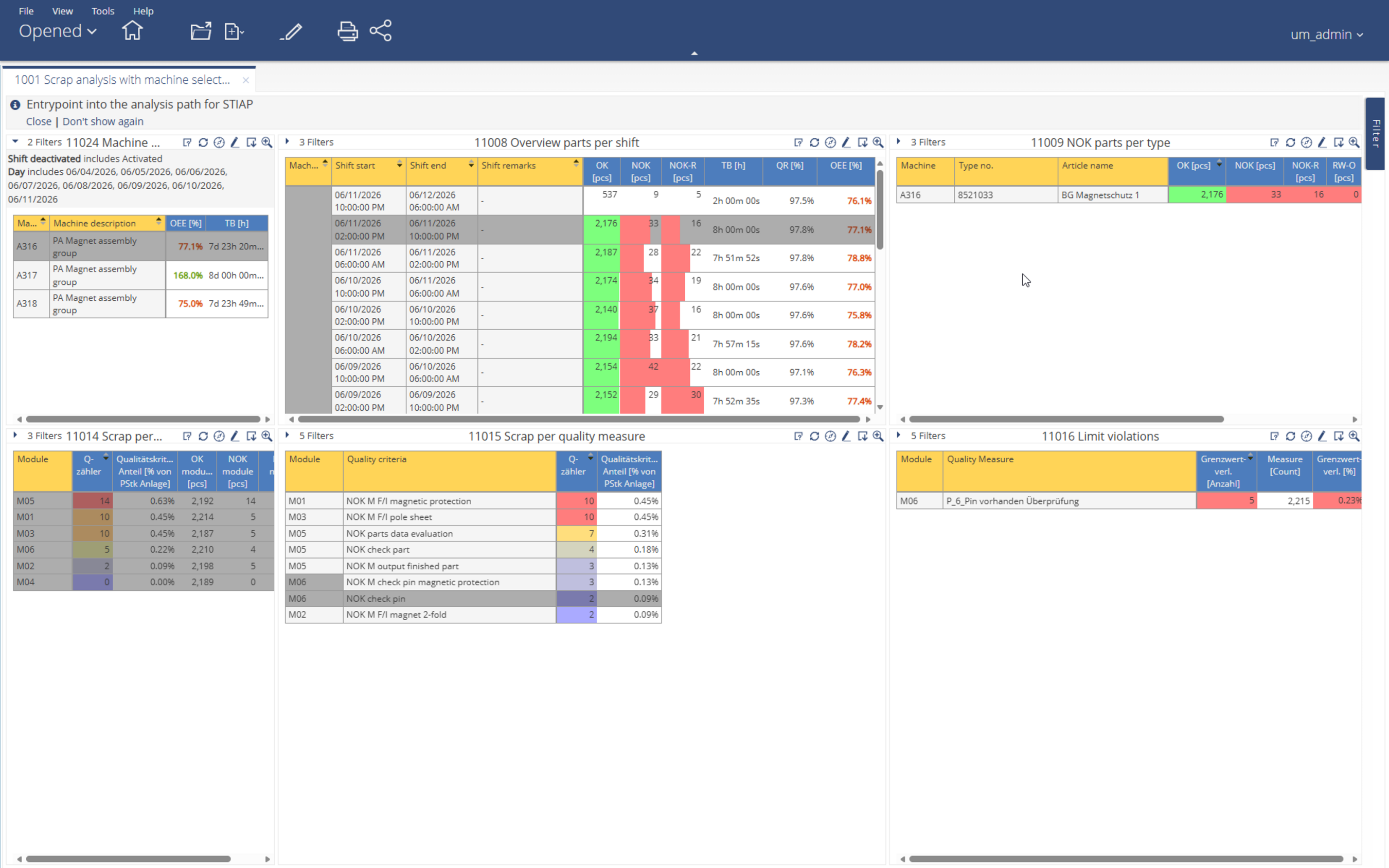
Sign 2: Lack of Transparency in Production Status and Isolated Data Silos

The Problem: 

You use ERP, MES, SCADA, and other systems, but they don't "talk" to each other. Information is fragmented and isolated within different departments or systems. The overview of the entire production process is incomplete, leading to delays, miscommunication, and suboptimal decisions. Current production figures or the status of a specific order are only available with significant manual effort or not at all. You are struggling with inefficiencies and isolated systems.

The Solution with a PCS:

A powerful PCS acts as the central nervous system for your production. It integrates data from various sources and systems, creating a unified, up-to-date information base. This provides you with:

  • Real-time transparency: The exact status of your orders, machines, and materials at all times.
  • Integrated data view: A consolidated view of all relevant production data, enabling cross-silo analysis.
  • Automated data acquisition: Minimizes manual intervention and reduces sources of error, leading to more reliable data. 

How STIWA Shopfloor Software Helps: 

STIWA Software enables "seamless integration into your existing IT systems" and helps you "unlock the full potential of your production with real-time insights, automated data acquisition" . Its modular architecture is highly flexible and can be easily connected to existing systems like ERP, MES, CAQ, or machine controls . This allows you to "optimize your processes and minimize downtime with standardized KPIs and intelligent tools that enable smarter and faster decisions – for higher profitability and greater operational efficiency".

Sign 3: Difficulties in Localizing Quality Defects or Avoiding Overproduction

The Problem:

You produce too much scrap, have high rework rates, or find that you regularly produce more parts than actually needed (overproduction). The cause of these quality problems or inefficiencies in quantity control is often unclear and difficult to attribute to specific machines, processes, or shifts. This leads to material waste, additional costs, and tied-up capital. Control over product quality and the efficiency of material flow is lost.


The Solution with a PCS:

A Production Control System provides you with the tools to identify quality problems directly at the source and precisely control production. It enables:

  • Real-time quality monitoring: Immediate detection of deviations in process parameters that could lead to quality issues.
  • Traceability: Every manufactured part can be tracked through the production process, which significantly simplifies error analysis.
  • Process optimization: By analyzing production data, processes can be adaptively optimized to reduce defect rates.
  • Precise quantity planning: Avoidance of overproduction through accurate recording of demand and actual production.

How STIWA Shopfloor Software Helps:

With STIWA Shopfloor Software, you can achieve "higher output," which translates into "more OK parts, less scrap" . The software's ready-to-use- reporting is particularly valuable here, as they help to identify anomalies and optimization potentials and provide concrete recommendations for action. For example, AI can "reduce rework defect rates by up to 30%". This leads to "cost savings" by reducing waste and downtime and supports "better decision-making" through real-time data and transparency.

Conclusion:

If your production suffers from high downtime, lack of transparency, or recurring quality problems, these are not unfortunate circumstances but clear indicators that it's time to invest in a modern Production Control System. A PCS, like STIWA Shopfloor Software, provides the necessary tools and insights not only to overcome these challenges but to elevate your production to a new level of efficiency and profitability. Lay the foundation for smarter production and enable better, data-driven decisions.

Blog

Problems Solved Instead of Theory Discussed

Had enough of theory? As an engineer or production manager, STIWA's digital machine model helps you avoid commissioning errors, save retrofit costs,…

read more

Reading time: 3 min

Best Practice

Would you like to learn more? We are here for you!