Machine Downtime Classification: From Guesswork to Insight
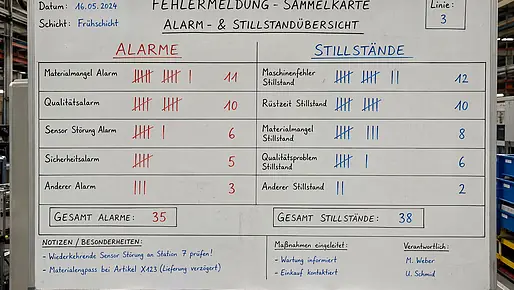
If a logistics delay is misclassified as a technical fault, engineering teams waste time solving the wrong problems. Discover how automated…
Reading time: 3 min
The IT/OT Manufacturing Summit Europe showed a clear shift from AI hype to practical manufacturing value. Four topics stood out: scalable architectures, meaningful production data, AI use cases, and guardrails for autonomous systems. The common foundation: connecting technology to shop-floor reality.
At this year’s summit, discussions with European manufacturing managers showed a clear shift: the focus is moving away from experimental technology toward solving concrete production problems.
Below are the four challenges we discussed at the event, along with their practical impact on your daily operations.
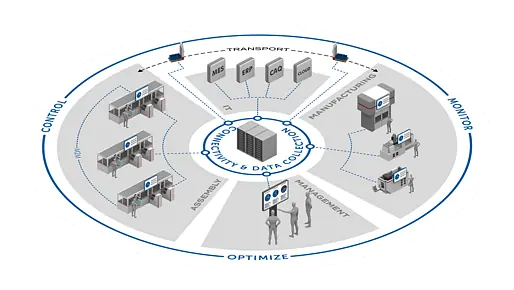
When connecting ERP, MES, SCADA, and cloud platforms, discussions quickly move from IT systems to functional responsibilities.
Implementing artificial intelligence in a factory fails if the underlying infrastructure and data are not ready, or if the staff lacks the necessary skills.
Connecting different software programs is useless if departments and machines interpret the same terms differently.
As AI systems take a more active role in production, the challenge shifts from generating insights to deciding what AI is allowed to do autonomously.
The Practical Value: Clear decision boundaries allow manufacturers to increase autonomy without losing control. AI can react to deviations and optimize processes within predefined limits, while critical or uncertain situations are escalated to human experts. This creates a path toward autonomous production that is controlled, traceable, and safe.
For STIWA Shopfloor Software, these discussions reinforce a key principle: digitalization, AI, and optimization deliver value only when grounded in production reality.
This means building on reliable, well-structured shop floor data, addressing clearly defined production challenges, and designing software around real manufacturing processes and constraints.
Technology creates potential. Connecting it to shop floor reality turns that potential into measurable production value.
Building a reliable data foundation relies on proven methods rather than theories. Explore these resources to see how these principles are applied in actual manufacturing environments:
If a logistics delay is misclassified as a technical fault, engineering teams waste time solving the wrong problems. Discover how automated…
Reading time: 3 min
Discover how to select the perfect Line Control System (LCS) for your manufacturing operations. This article outlines 7 crucial criteria to help you…
Reading time: 5 min
Discover how Knorr-Bremse achieved a 30% lower error rate in rework by transforming it into a self-learning system with STIWA's advanced analytics.
Would you like to learn more? We are here for you!