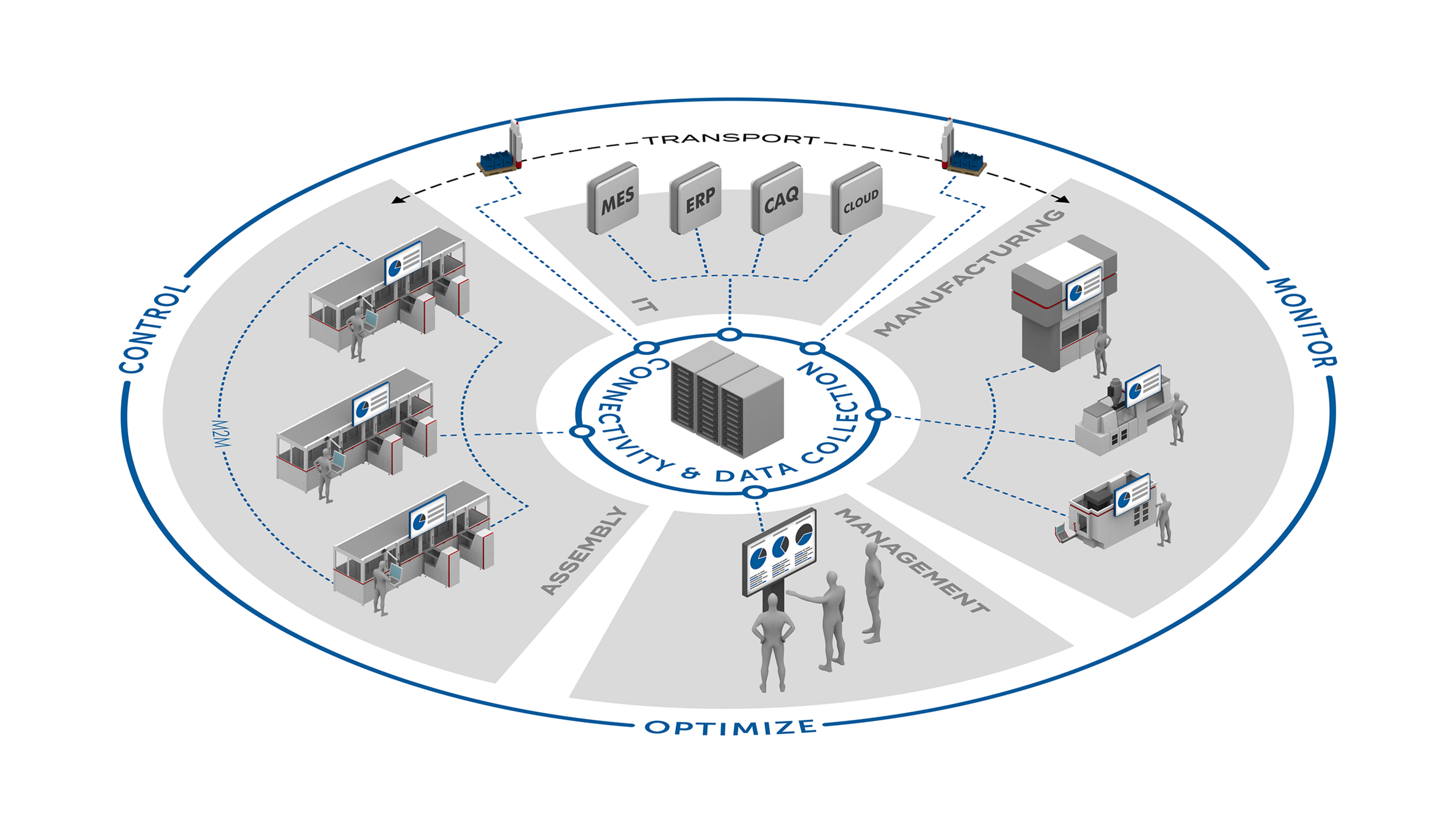
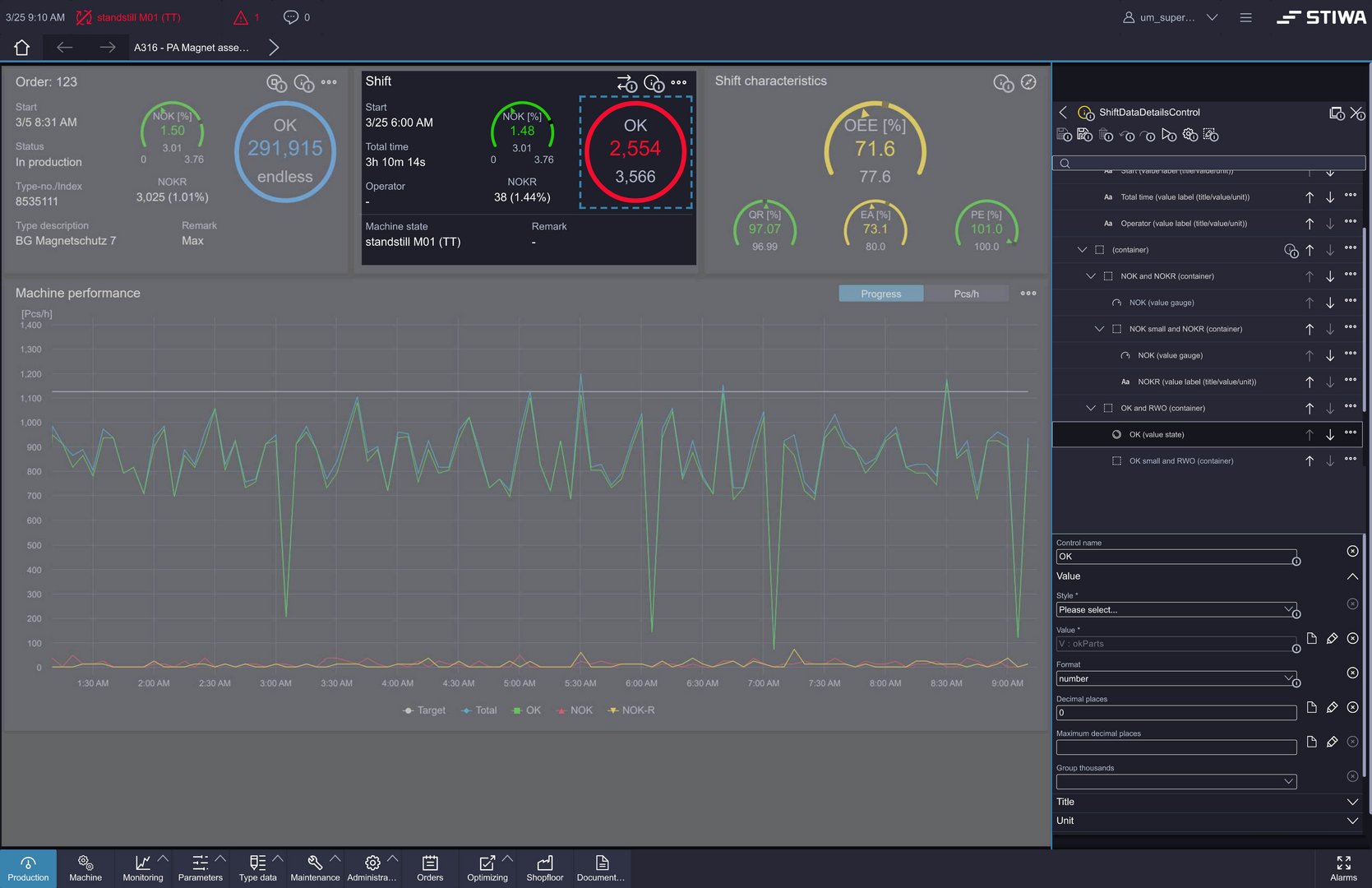

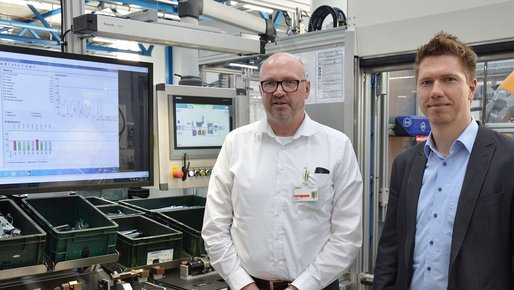
Digital manufacturing ecosystem connecting production, logistics, quality, and monitoring through centralized shopfloor software.

How to Select a Line Control System for Modern Manufacturing

Discover how to select the perfect Line Control System (LCS) for your manufacturing operations. This article outlines 7 crucial criteria to help you choose the ideal Line Control System to optimize your production.

Shopfloor Expert

Reading time: 5 min

Best Practice

Criterion 1: Integration Capability – Seamless Connection in the Digital Factory

  • Significance: An Line Control System rarely operates in isolation. It must seamlessly integrate into the existing IT landscape.
  • Aspects:
    • ERP Connectivity: Automatic transfer of order data and material availability.
    • MES Connectivity: Data exchange with the Manufacturing Execution System for detailed production orders, feedback, and quality data.
    • Machine and Equipment Connectivity: Interfaces to PLC controls, sensors, and robots for real-time data and control.
    • Open Interfaces: Support for standards (e.g., OPC UA, MQTT) or easily customizable APIs.
  • Questions for Selection: What interfaces does the system offer? How complex is the integration into our existing infrastructure?

Criterion 2: Scalability and Flexibility – Growing Without Hindrance

  • Significance: Production environments are constantly evolving. A good MES software must be able to adapt and grow with them.
  • Aspects:
    • Line and Plant Growth: Can the system easily integrate new production lines or machines?
    • Feature Expansion: Is the system modular, allowing for the addition of future functionalities (e.g., AI-driven optimization, predictive maintenance)?
    • Adaptation to Process Changes: How easily can production workflows, sequences, or work instructions be configured and adjusted within the system?
  • Questions for Selection: Is the system future-proof? Can we adapt it to our changing requirements without having to replace the entire system?

Criterion 3: Real-Time Visibility and Intra-Line Logistics – Keeping Production Flowing

  • Significance: The ability to collect, analyze, and clearly display real-time data is at the heart of any effective Line Control System.
  • Aspects:
    • Data Acquisition: Automatic capture of process, quality, and machine data.
    • Dashboards and Visualizations: Clear, intuitive presentation of KPIs (OEE, cycle time, utilization), current production status, and disruptions.
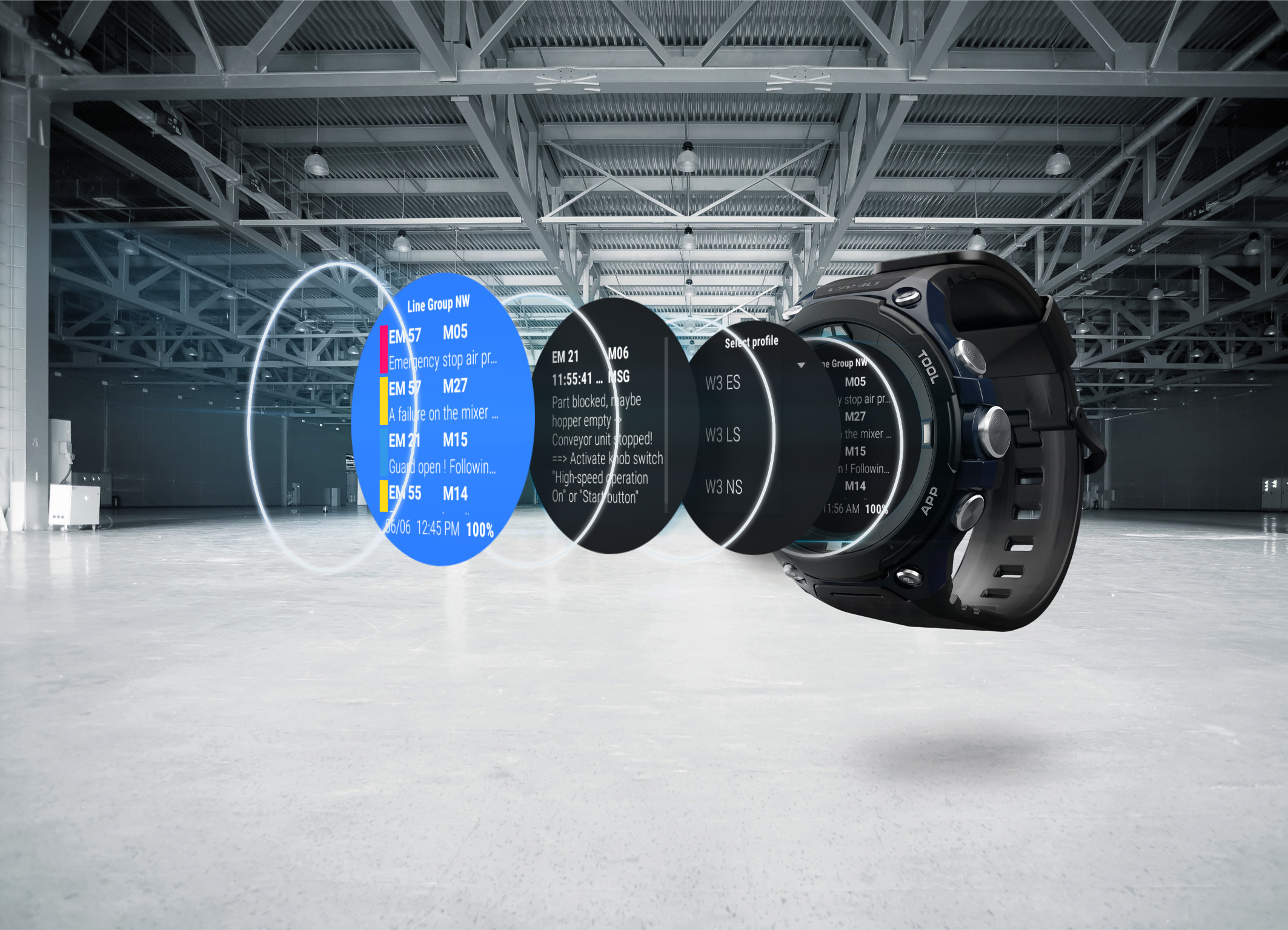
    • Alarm and Notification Systems: Immediate information in case of deviations or problems.
    • Reporting: Flexible reporting functions for historical data analysis and performance evaluation.
    • Recipe Management: Real-time access and management of production recipes and parameters, ensuring correct process execution.
    • Intra-Line Logistics: Precise control over part status, component feeding, and order execution within and across production lines, rework management, and recipe management.
  • Questions for Selection: How up-to-date is the displayed data? Are the dashboards customizable to our needs?

Criterion 4: User-Friendliness (UI/UX) – Acceptance and Efficiency on the Shopfloor

  • Significance: Even the most powerful Assembly Line Control software is useless if it cannot be adopted or operated by shop floor employees.
  • Aspects:
    • Intuitive Operation: Easy navigation and clear display for operators, shift leaders, and production managers.
    • Customizable Interfaces: Ability to tailor relevant information for different user roles.
    • Low Training Effort: Short onboarding times for new employees.
    • Supported Onboarding: Affordable training programs and well-thought-out rollout strategies to ensure that everyone is on board.
    • Error Minimization: Well-designed UI/UX reduces operational errors.
  • Questions for Selection: Is the interface clear and easy to understand? What is the feedback from current users?

Criterion 5: Functional Scope and Customizability – Tailored Solution for Specific Requirements

  • Significance: Every production has its unique characteristics. The Line Control System should be able to reflect these.
  • Aspects:
    • Core Production Control:
      • Order and variant management
      • Material flow and supply management
      • Intra-line logistics for managing and tracking materials and components
      • Machine control and process data acquisition
      • Recipe management
      • Cycle time monitoring and optimization
      • Quality data management and documentation
      • Traceability of products and components
      • Error management, fault detection, and alerting
      • Performance analysis (e.g., OEE calculation or automated downtime detection)
      • Digital work instructions and worker guidance to support shopfloor personnel
    • Specific Industry Requirements: Consideration of industry-specific standards or processes (e.g., batch management in process industries, variant production in the automotive sector).
    • Customization Options: Can the system be adapted to specific workflows, logics, or calculations?
    • Modularity: Does the system only offer the necessary modules to reduce complexity and costs?
  • Questions for Selection: Does the system cover our core processes? Can we map specific peculiarities of our production?

Criterion 6: Support, Maintenance, and Updates – Long-term Partnership and Reliability

  • Significance: A Line Control System is a long-term investment. The provider's support is crucial for smooth operations.
  • Aspects:
    • Support Availability: Response times, accessibility, multilingual support.
    • Maintenance and Service Contracts: What is included in the service package (updates, patches, hotfixes)?
    • Update Strategy: How often and to what extent are new versions and features provided? Is every update a project from scratch or a simple update?
    • Documentation and Training: Comprehensive documentation and training offerings for key users and administrators. View Training Options
  • Questions for Selection: How reliable is the provider? Are there reference customers who can confirm the quality of their support?

Criterion 7: Security and Compliance – Protection for Data and Processes

  • Significance: In times of increasing cyber threats and stringent data protection regulations, the security of the Line Control System is of paramount importance.
  • Aspects:
    • Data Security: Access controls, encryption, backup strategies.
    • Operational Reliability: Redundancy concepts, emergency systems to ensure continuous operation.
    • Audit Trail: Traceability of all changes and actions within the system.
    • Compliance: Adherence to relevant industry standards and data protection regulations (e.g., GDPR, NIS-2, CRA).
  • Questions for Selection: How does the system protect our production data? Does it comply with all relevant security standards and regulations?

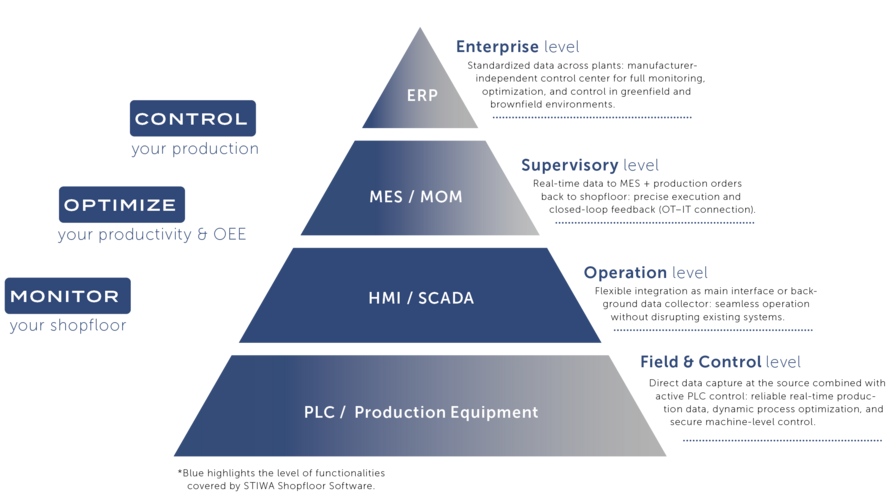
STIWA Advantage: STIWA Shopfloor Software meets these key criteria and offers a robust, flexible shopfloor solution. Our system enables seamless integration into existing IT landscapes and ensures scalability for future growth. You’ll benefit from easy integration in greenfield projects through pre-built modules and a powerful low-code platform for brownfield projects. With advanced real-time data processing capabilities and intuitive usability, it empowers your shop floor team. We provide a comprehensive feature set with a high degree of customization, backed by dedicated support and a strong commitment to security and compliance, to guide your company on the path to successful digital manufacturing.


Take the next step towards optimized production: Contact us to discuss your specific needs or to schedule a personalized demo of Shopfloor Software. Let STIWA Software help you optimize your production and secure a lasting competitive advantage.

SuccessStory

Valeo: Performant production start-up by means of STIWA analysis software

To increase efficiency of its machines, Valeo Wischersysteme GmbH relies on software know-how made by STIWA: The analysis tool is called AMS…

New Mobility
SuccessStory

Efficient Production Through Efficient Automation & Software

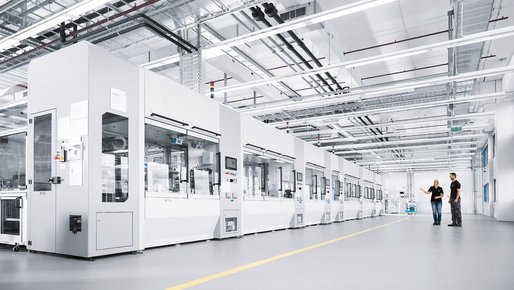
More than just a metric: At FORVIA HELLA’s electronics plant, STIWA Shopfloor Software led to a 60% increase in OEE. The key factor was the precise…
New Mobility
SuccessStory

AI at rework for 30% less error rate

Data driven solutions create maximum efficiency in the rework process. For Knorr-Bremse this is an essential quality control process at their plant on…

New Mobility
SuccessStory

Efficiency increase of Festo production via STIWA Manufacturing Software

To optimize their production processes and increase machine efficiency significantly, Festo AG capitalizes on Manufacturing Software from STIWA.

Industrial Applications
Arrow Left
Arrow Right

Would you like to learn more? We are here for you!