
SuccessStory
Enhancing Production Efficiency at Festo with Shopfloor Software
Festo optimized production and machine efficiency with STIWA's Shopfloor Monitor & Andon Boards, gaining real-time insights for faster…
Modern factories are flooded with data from ERP, MES, and SCADA systems, yet production teams still struggle to identify the next best action during critical machine stoppages. Discover how Manufacturing Intelligence bridges this operational gap using Digital Production Cockpits and active Line Control Systems to optimize throughput, reduce scrap, and turn raw telemetry into decisive shopfloor actions.
Over the past decades, manufacturers have invested heavily in digital technologies to improve productivity, quality and operational efficiency. Modern production environments typically combine Enterprise Resource Planning (ERP), Manufacturing Execution Systems (MES), SCADA systems, Industrial IoT (IIoT) platforms and visualization software to manage increasingly complex manufacturing operations.
ERP systems such as SAP S/4HANA, Microsoft Dynamics 365, Oracle NetSuite and Infor CloudSuite manage planning and business processes. MES platforms including Siemens Opcenter, Rockwell FactoryTalk, Dassault DELMIA Apriso and MPDV HYDRA execute production and collect manufacturing data. SCADA systems such as Siemens WinCC, COPA-DATA zenon, AVEVA InTouch and Ignition from Inductive Automation monitor industrial equipment, while visualization platforms including Power BI, Grafana, Tableau, Peakboard and Qlik Sense transform manufacturing data into dashboards and reports.
Together these systems have transformed manufacturing. Yet many production managers continue to ask the same questions every day.
Most software solutions successfully answer what happened. Far fewer can determine what should happen next. This is where Manufacturing Intelligence becomes the next evolution of digital manufacturing.
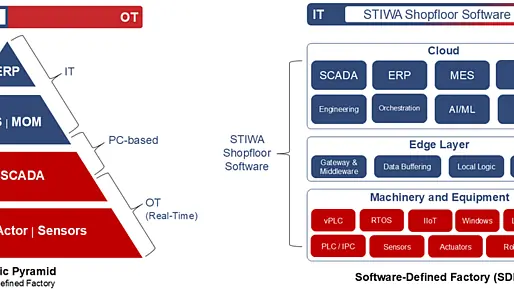
Modern manufacturing software can be viewed as four complementary layers. Each layer fulfils a different purpose and answers different operational questions.
Enterprise Resource Planning (ERP) systems coordinate business processes and production planning across the entire organization. ERP systems answer one fundamental question: What should be produced? By synchronizing customer demand, material availability, production capacities, and financial planning, ERP software coordinates macro-level operations. However, ERP systems generally lack real-time visibility into actual shopfloor execution.
Manufacturing Execution Systems (MES) connect high-level production planning with shopfloor execution. An MES answers the question: What happened during production?
These systems provide complete production documentation, track batches, and establish the operational execution backbone for manufacturing.
Once production data is available, manufacturers require visibility across operations. This layer consists of three complementary software categories that monitor and visualize current states
SCADA systems monitor and execute local process control at the machine and automation layers. They answer: What is happening on a specific machine or process? While SCADA systems ensure technical stability and safety for localized physical processes, they do not optimize multi-station material flow or line-wide bottlenecks.
Industrial IoT platforms manage edge-to-cloud data ingestion and connectivity across heterogeneous manufacturing fleets. They answer: How can industrial assets be connected? They solve the structural data acquisition challenge but do not natively contextualize raw data to orchestrate line-wide material flow.
Typical functions include:
Visualization software transforms compiled data streams into dashboards and management reports. These platforms answer: What does the production data reveal? While highly effective at creating retrospective transparency, these systems are fundamentally passive—they visualize historical states without prioritizing operator actions or actively controlling physical processes.
Typical functions include:
By the time manufacturers reach this layer, the enterprise already possesses ERP plans, machine data, production records, quality information, and countless dashboards. Yet the most important operational question often remains unanswered: What is the next best action?
Knowing that OEE decreased is valuable. Knowing which recurring machine stoppage caused the loss provides transparency. Knowing exactly which action will deliver the highest production improvement today is Manufacturing Intelligence.
This active intelligence is delivered through two complementary concepts:
Together, they bridge the gap between data visibility and physical execution.
STIWA Shopfloor Software acts as the overarching Manufacturing Intelligence and active orchestration layer, seamlessly extending existing ERP, MES, SCADA, and IIoT systems. Rather than replacing established IT/OT platforms, it unifies high-speed PLC telemetry, ERP priorities, and MES execution limits into a single, high-performance data model.
This architecture creates a continuous operational feedback loop—from connectivity and transparency to automated optimization and active production control.
Traditional manufacturing software was designed to plan production, execute orders, monitor equipment or visualize KPIs. These capabilities remain essential, but modern manufacturers require more than information, they require intelligent operational decisions.
STIWA Shopfloor Software complements existing ERP, MES, SCADA, IIoT and visualization platforms with an integrated Manufacturing Intelligence layer built around Digital Production Cockpits and Line Control Systems.
Instead of simply displaying production data, it helps manufacturers understand why problems occur, determine which actions will have the greatest operational impact, and actively orchestrate production to continuously improve throughput, quality and Overall Equipment Effectiveness (OEE).
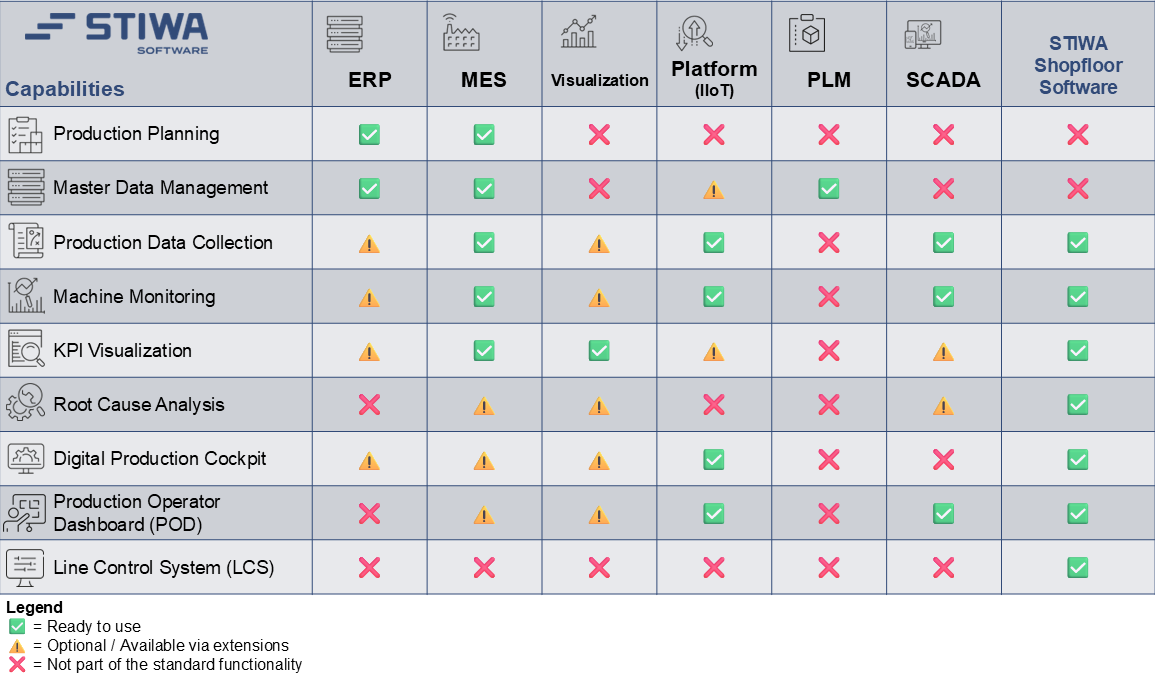
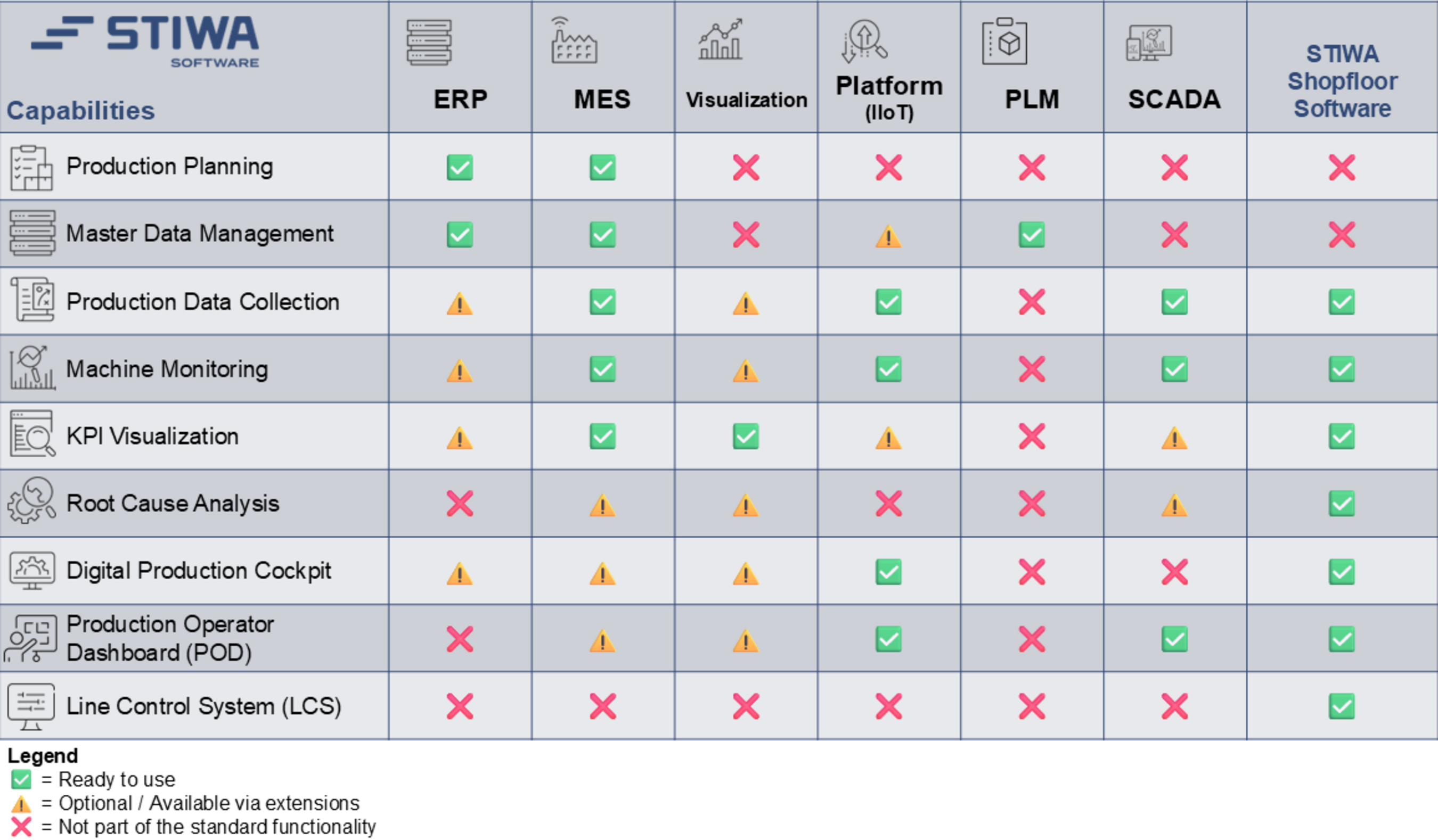
In industrial engineering, Production Planning orchestrates manufacturing processes, material allocation, and finite capacity scheduling (FCS). Enterprise resource planning (ERP) platforms such as, SAP (S/4HANA), Microsoft (Dynamics 365), Oracle (NetSuite), or Infor (CloudSuite), utilize constraint-based heuristics to resolve capacity bottlenecks and material deficits before execution. By continuously synchronizing real-time operational variables with the master production schedule (MPS), production planning optimizes throughput.
Master Data Management (MDM) serves as the central, validated semantic repository for an enterprise’s structural data models, establishing a single source of truth (SSOT). MDM consolidates and synchronizes high-value reference datasets, including Bills of Materials (BOMs), routings, machine recipes, and quality tolerances, originating from PLM systems like Siemens (Teamcenter) or SAP (Product Lifecycle Management).
Production Data Collection (PDC) provides systematic, low-latency ingestion of operational parameters from physical manufacturing assets. Integrated into Manufacturing Execution Systems (MES) such as Siemens (Opcenter), Rockwell Automation (Plex / FactoryTalk), Dassault Systèmes (DELMIA Apriso), industrie informatik (cronetwork MES) or MPDV (Hydra). This rudimentary data pipeline improves order scheduling and reduces reaction times to machine downtimes.
Machine Monitoring enables high-frequency acquisition of asset telemetry directly from the physical automation layer. Modern IIoT platforms like Inductive Automation (Ignition), COPA-DATA (zenon), Siemens (Insights Hub / Industrial Edge), PTC (ThingWorx), or AVEVA (AVEVA CONNECT / PI System) query PLC data. This low-latency communication logs machine-stops, cycle-time drift, maximizing Overall Equipment Effectiveness (OEE).
KPI Visualization is the mathematical aggregation and graphical visualization of shop floor data. Visualisation systems such as Microsoft (Power BI), Grafana Labs (Grafana), Salesforce (Tableau), Peakboard (Peakboard), or Qlik (Qlik Sense) ingest operational data to calculate standard metric, like OEE, MTTR, and Quality Rate. Rendering these metrics on interactive dashboards translates complex data streams into immediate operational status indications, driving real-time, data-driven operational control.
Root Cause Analysis (RCA) is an algorithmic diagnostic process designed to isolate the underlying issues of mechanical or organizational problems. RCA systems apply correlation models, statistical process control (SPC) rules, and machine learning directly to datasets aggregated from IIoT platforms like PTC (ThingWorx), Inductive Automation (Ignition), COPA-DATA (zenon). By analyzing complex interdependencies among machine states, tooling cycles, and material batches, the system isolates specific systemic variables to reduce diagnostic search times.
A Digital Production Cockpit (DPC) is the event-driven execution and orchestration layer bridging Operational Technology (OT) and Information Technology (IT). Unlike passive visualization systems like Power BI or Grafana, the DPC actively orchestrates the present in a closed loop . It integrates high-speed PLC connectivity, ERP order priorities from SAP (S/4HANA), and MES execution limits into a single database. The DPC calculates immediate priorities, triggers control strategies, and dispatches automated alerts to minimize scrap and drive OEE.
The Production Operator Dashboard (POD) is a specialized Human-Machine Interface (HMI) delivering contextualized, order-specific operational data directly to the workstation. Querying plans and master data from PLM systems like Siemens (Teamcenter) or MES systems like DELMIA Apriso, the POD displays relevant BOM variants, interactive Digital Work Instructions (DWI), and active Poka-Yoke validation rules. Integrating direct input mechanisms (scanners, cameras, torque tools) validates manual assembly steps in real time, eliminating paper documentation and mitigating assembly errors.
A Line Control System (LCS) is an automation layer designed to orchestrate the execution of multi-station assembly lines. It replaces decentralized SCADA systems like Siemens (WinCC), AVEVA (InTouch / Plant SCADA), or COPA-DATA (zenon) with a centralized, real-time coordination architecture. Communicating directly with station PLCs, transport networks, and MES databases, the LCS manages material flow, dynamic product routing, and station releases. The system actively enforces takt and sequence control, dynamically modifying routing topologies to optimize total throughput.
In industrial operations, Enterprise Resource Planning (ERP) systems coordinate macro-level business processes, financial controlling, and master production scheduling (MPS) across the organization. Platforms such as SAP (S/4HANA), Microsoft (Dynamics 365), Oracle (NetSuite), or Infor (CloudSuite) synchronize customer demand with resource capacities. Operating on transactional, non-real-time databases, ERP systems establish the overdefined answer to what should be produced, but lack granular visibility into physical shop floor execution.
A Manufacturing Execution System (MES) bridges top-floor transactional planning with real-time operational execution. Solutions like Siemens (Opcenter), MPDV (HYDRA), Dassault Systèmes (DELMIA Apriso) or Rockwell Automation (FactoryTalk) manage production execution, order dispatching, detailed scheduling, and traceability. While they document what happened during production and provide essential regulatory compliance, they historically lack the deep PLC-level telemetry required for dynamic, real-time line orchestration.
Visualization software and Human-Machine Interfaces (HMIs) transform raw operational data into visual status representations, typically localized to a single machine or workspace. Platforms like Microsoft (Power BI), Grafana Labs (Grafana), Salesforce (Tableau), Peakboard (Peakboard), or Qlik (Qlik Sense) ingest compiled data streams to render OEE dashboards and management reports. While highly effective at creating retrospective transparency, these systems are fundamentally passive, meaning they visualize historical states without prioritizing operator actions or actively controlling physical processes.
Industrial Internet of Things (IIoT) platforms manage edge-to-cloud data ingestion and connectivity across heterogeneous manufacturing fleets. Systems like Inductive Automation (Ignition), COPA-DATA (zenon), Siemens (Insights Hub / Industrial Edge), PTC (ThingWorx), AVEVA (AVEVA CONNECT) or Inductive Automation (Ignition) establish direct PLC communication pipelines to standardize high-frequency telemetry. They solve the structural data acquisition challenge but do not natively contextualize this raw data to orchestrate line-wide material flow.
Product Lifecycle Management (PLM) systems serve as the engineering single source of truth (SSOT), managing a product's entire developmental lifecycle from CAD design to manufacturing routing. Platforms such as Siemens (Teamcenter) or SAP (Product Lifecycle Management) compile Bills of Materials (BOMs), engineering drawings, and manufacturing recipes. These specifications define the precise product configuration that execution systems (MES) and automation layers must physically reproduce.
Supervisory Control and Data Acquisition (SCADA) systems monitor and execute, local process control at the machine and automation layers. Platforms like Siemens (WinCC), COPA-DATA (zenon), AVEVA (InTouch / Plant SCADA), or Inductive Automation (Ignition) manage alarms, recipe distribution, and direct operator control interfaces. SCADA systems ensure technical stability and safety for localized physical processes but do not optimize multi-station material flow, line-wide bottlenecks, or enterprise-level business priorities.
The transition from passive monitoring to active shop floor orchestration represents a definitive competitive advantage in modern manufacturing. Having access to data is no longer the bottleneck; the differentiator is how rapidly that data can be converted into the next best physical action on the production line.
By integrating a dedicated Manufacturing Intelligence layer, factories move beyond retrospective troubleshooting. Instead, production teams gain the ability to preempt bottlenecks, dynamically route materials, and continuously maximize Overall Equipment Effectiveness (OEE) using existing IT/OT investments. The technology to turn raw shop floor telemetry into automated, value-driven execution is already here.
Festo optimized production and machine efficiency with STIWA's Shopfloor Monitor & Andon Boards, gaining real-time insights for faster…
More than just a metric: At FORVIA HELLA’s electronics plant, STIWA Shopfloor Software led to a 60% increase in OEE. The key factor was the precise…
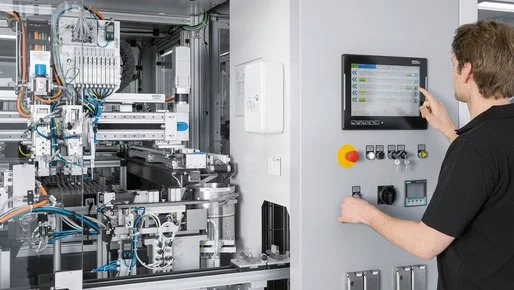
Discover how Festo addressed production challenges with strategic data analysis, achieving a 40% increase in output through targeted optimizations.
Industrial data integration doesn't have to mean complex middleware architectures. Discover how direct PLC connectivity, integrated protocol handling,…
Reading time: 4 min
Would you like to learn more? We are here for you!